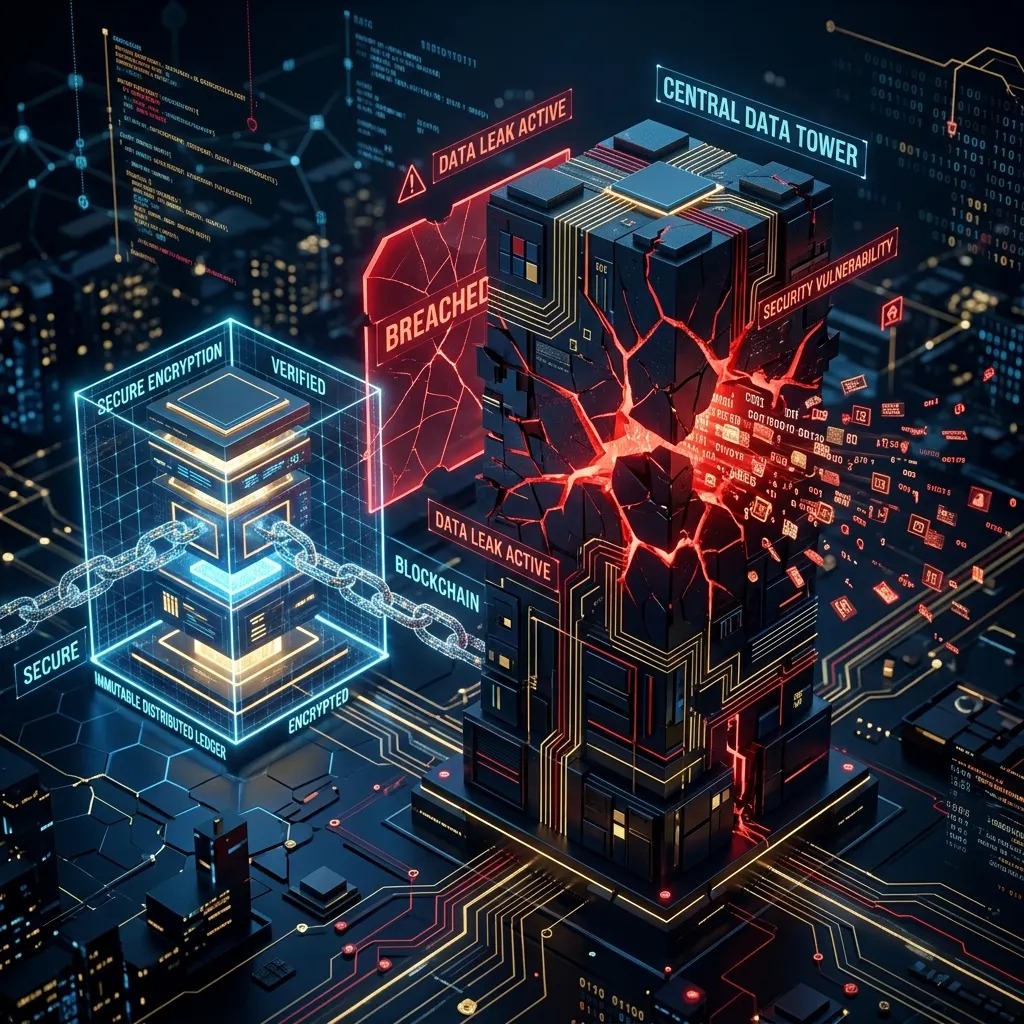
The record of provenance and transaction history in the high-value collectibles sector has historically depended on traditional relational databases (such as SQL systems managed on-premise or by conventional cloud providers). However, in the face of increasing advanced cyber threats and internal threat vectors, this traditional infrastructure reveals critical design vulnerabilities.
Structural Flaws of SQL Against Fraud
Standard relational databases operate under the principle of CRUD (Create, Read, Update, Delete) operations. This means that any user or administrator with elevated system privileges (Database Administrator or DBA), or any attacker who successfully compromises their credentials, has the technical ability to directly modify or delete historical records.
In a numismatic context, this opens the door to undetectable fraud: tampering with old ownership records, altering provenance certificates to validate counterfeit pieces, or inserting fake transactions. Lacking native mathematical immutability, traditional database audits often fail to detect these modifications if the attacker wipes the corresponding system and transaction logs from the virtual machine.
Immutability by Design and Defense in Depth
Solving this structural challenge requires a transition to immutable ledger architectures. FNTC's technical ecosystem discards exclusive reliance on traditional databases for storing authenticity certificates. We implement a cryptographically encrypted repository where records are linked using public-key cryptography and hashing, preventing any retroactive modification without instantly alerting the system.
This architecture is complemented by our Defense in Depth principle, which establishes layers of physical, administrative, and technical security to safeguard the primary databases. Access is dynamically authenticated and encrypted under Zero Trust parameters at every single touchpoint, isolating the data core from external threats and configuration exploits.
The Role of the SOC and ML-Powered Auditing
In addition to cryptographic data protection, we monitor the infrastructure health through our SOC (Security Operations Center) operating 24/7. Machine learning algorithms immediately detect access anomalies or unusual database queries, alerting the security team of any suspicious behavior or alteration attempts in real-time.
If you are interested in evaluating the vulnerabilities of your current infrastructure or implementing our immutable provenance repository, we invite you to contact our specialized engineering team using our Contact Form.